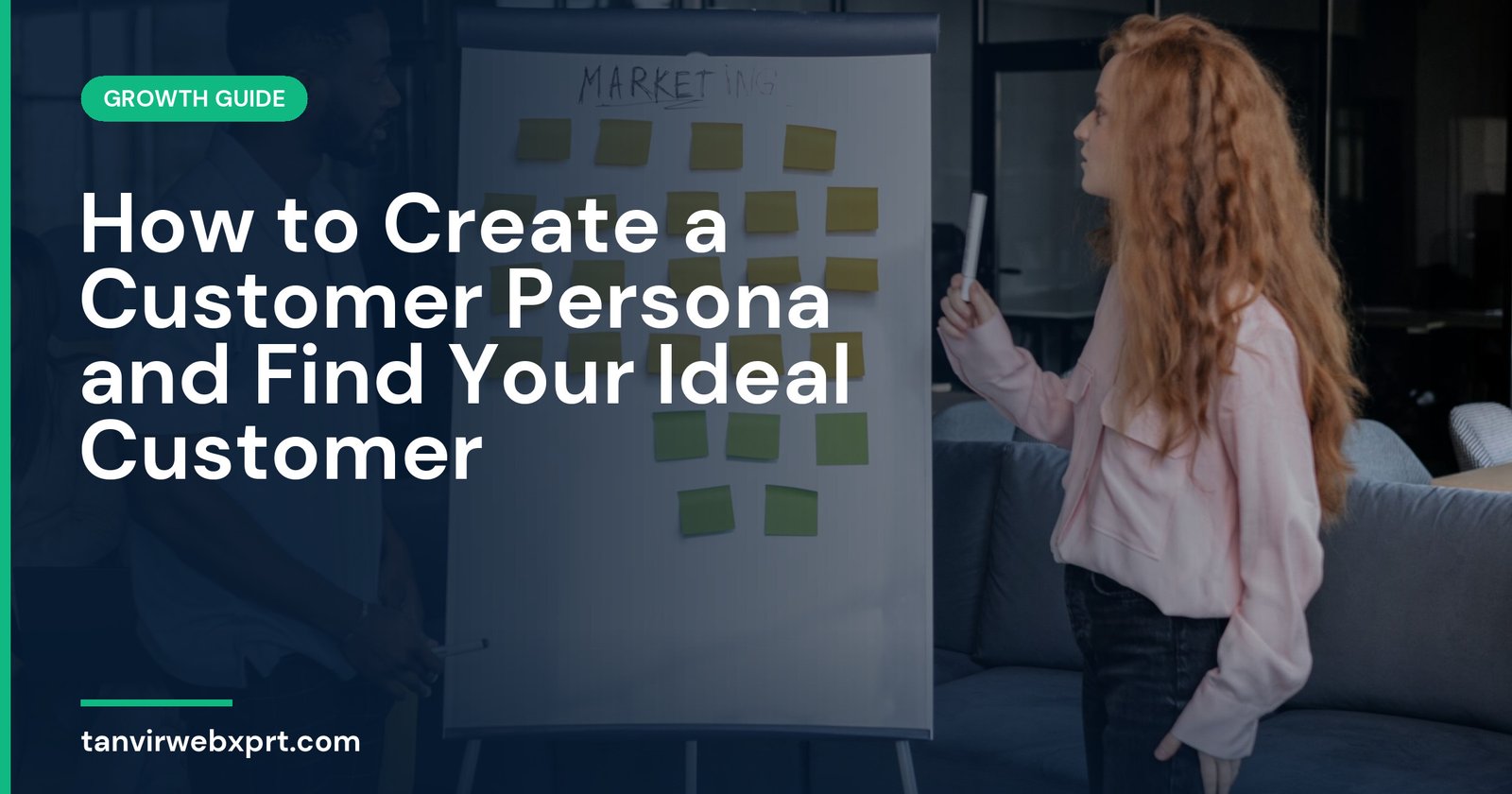
A customer persona is a short, realistic profile of your ideal buyer: who they are, what they are trying to achieve, what stops them from buying, where they look for answers and which words they use. To create one, study your best existing customers (orders, messages, reviews), talk to five to ten of them, look for patterns, and write one page per persona. A good persona changes real decisions: which ads you run, what your website says first and which products you push.
- Build personas from real customers, not from guesses about who you would like to sell to.
- Goals, problems and objections matter more than age and gender.
- Most small businesses need one or two personas, not seven.
- Use customers’ exact words in your ads and website.
- Get a target-customer profile and growth ideas from the free AI Business Growth Consultant.
“Everyone” is not a customer
Ask a new business owner who their customer is, and you will often hear “everyone”. A tutor says everyone who wants to learn. A bakery says everyone who likes cake. A web designer says every business that needs a website.
The trouble is that you cannot write an ad to everyone. You cannot design a page for everyone. When you try, your message becomes so general that nobody feels it is meant for them.
Now imagine the bakery owner looks at her orders and notices something: most of her biggest orders come from working mothers in their thirties who order birthday cakes for their kids, usually on Thursday nights, usually asking if the cake can have a cartoon theme and arrive by Saturday morning. That is not “everyone”. That is a person. And once she can picture her, writing an ad becomes easy: “Saturday birthday? Order by Thursday, we deliver a custom theme cake to your door.”
What goes into a useful persona
| Section | What to write | Why it matters |
|---|---|---|
| Name and snapshot | A made-up name, life stage, job, location | Makes the persona easy to discuss in a team |
| Goal | What they want to achieve with a product like yours | Shapes your main promise |
| Problem | What is frustrating them right now | Becomes your ad hook |
| Objections | Why they hesitate: price, trust, time, risk | Tells you what proof and guarantees to show |
| Where they look | Facebook groups, Google, YouTube, friends, marketplaces | Decides your channels |
| Their words | Exact phrases from messages and reviews | Makes your copy sound right |
| Buying trigger | The moment they decide to act | Tells you when to advertise |
How to create a customer persona, step by step
- List your best customersNot the biggest complainers, the ones who buy again, pay on time and recommend you. Ten to twenty names is plenty.
- Look at the data you already haveOrder history, locations, products bought, time of year, average spend, how they found you.
- Read messages and reviewsCopy the questions they ask before buying and the words they use to praise you.
- Talk to five to ten of themA ten-minute phone call or a short voice note conversation. Ask what they were trying to solve and what almost stopped them.
- Group the patternsPut similar people together. Usually one or two clear groups appear.
- Write one page per personaFill in the sections above in plain language.
- Use it and update itCheck every new ad, page and offer against the persona. Update it once or twice a year.
Questions to ask in customer interviews
- What was happening when you started looking for something like this?
- What else did you try or consider before choosing us?
- What almost made you not buy?
- What would you tell a friend about us?
- Where do you usually look for recommendations?
A persona example: a home-based tutor
What changes once this persona is written down: online classes in the evening, a free first session, short monthly progress reports for parents, and ads in local parent groups that mention small batches and safety.
Common persona mistakes
- Too many personas: start with one. Add a second only when the data clearly shows another group.
- Only demographics: “Female, 25 to 34, Dhaka” says nothing about why she buys.
- Inventing details: a persona built in a meeting room without talking to customers is fiction.
- Never using it: if the persona does not change your ads, website or offers, it is decoration.
Put your persona to work
Once you know who you serve, everything else gets easier. Use the persona to write your ad copy, choose your ad audiences and shape your SWOT analysis. Or describe your business in the free AI Business Growth Consultant and get a target-customer profile and a growth plan in about a minute.
Sources
- Nielsen Norman Group: Personas make users memorable
- U.S. Small Business Administration: Market research
Frequently asked questions
What is a customer persona?
A customer persona is a short, realistic profile of your ideal buyer, including their goals, problems, objections, where they look for answers and the words they use. It is based on research with real customers.
How many customer personas should a small business have?
Most small businesses need one or two. Start with one based on your best customers and add a second only if the data shows a clearly different group.
What is the difference between a target market and a persona?
A target market is a broad group, such as working parents in Dhaka. A persona is one detailed, representative person inside that group, which makes decisions about messaging easier.
How do I find my ideal customer?
Look at your best existing customers: who buys again, spends more and recommends you. Study their orders, messages and reviews and talk to a few of them to find the patterns.
Do I need expensive research to build a persona?
No. Your orders, messages, reviews and five to ten short customer conversations are enough for a useful first persona.
Answer a few questions about your business and get a practical growth plan you can start this week.
Guides for this tool
 Guide · 5 min readHow to Do a SWOT Analysis for a Small Business (With Example)
 Guide · 5 min readHow to Get More Customers for a Local Business: 7 Proven Ways
 Guide · 5 min readHow to Price Your Product or Service: A Simple Guide for Small Businesses
 Guide · 5 min readCustomer Retention Strategies: 10 Ways to Keep Customers Coming Back
Want a tool, website or app like this for your business?
Every free tool on this site is designed and coded by Tanvir H, a Bangladesh-based WordPress and Elementor web designer with 7+ years of experience and 650+ projects for clients worldwide. Fast, mobile-first, search-optimised websites that turn visitors into customers.
- 650+ projects
- 7+ years
- 4.9★ rating
- Govt. registered freelancer