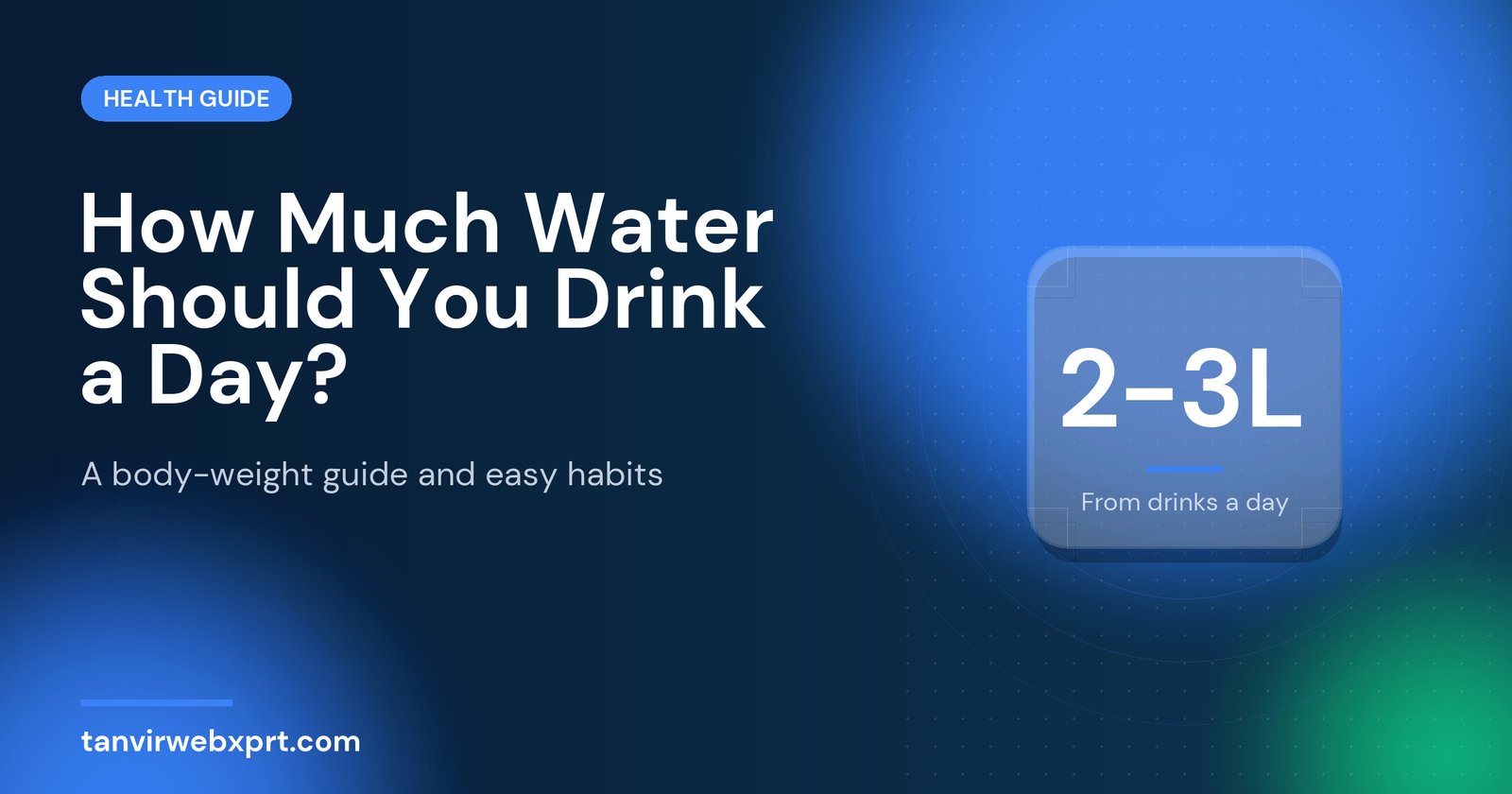
Most healthy adults need roughly 2 to 3 litres of fluid from drinks a day, more in hot weather or when active. The US National Academies set an adequate intake for total water (from drinks and food combined) of about 3.7 litres a day for men and 2.7 litres for women, with around 80% coming from drinks. A simple personal estimate is about 30 to 35 ml per kg of body weight. In everyday life, drinking when thirsty, having water with every meal and checking that your urine is pale yellow work well for most people.
- Total water includes water from food, tea, milk and other drinks.
- A rough guide is 30 to 35 ml per kg of body weight per day.
- Heat, sweating, exercise, fever and breastfeeding increase needs.
- Pale yellow urine is a simple sign of good hydration.
- See your daily water target in the free Smart Diet & Nutrition App.
The afternoon headache
Imagine an office worker in Dhaka who drinks two cups of tea in the morning and nothing else until lunch. By 3 pm, she has a dull headache, feels tired and can’t concentrate. She reaches for another tea and a biscuit.
When she starts keeping a one-litre bottle on her desk and finishing it by lunch, the afternoon slump becomes much milder. Not every headache is about water, of course, but in a hot climate with long, busy days, many people simply forget to drink.
How much water do you need?
| Body weight | At 30 ml/kg | At 35 ml/kg |
|---|---|---|
| 50 kg | 1.5 L | 1.75 L |
| 60 kg | 1.8 L | 2.1 L |
| 70 kg | 2.1 L | 2.45 L |
| 80 kg | 2.4 L | 2.8 L |
| 90 kg | 2.7 L | 3.15 L |
When you need more
Signs you might need more water
- Dark yellow urine or urinating rarely.
- Thirst, dry mouth.
- Headache, tiredness or dizziness.
- Feeling very hot with little sweating after activity.
Easy ways to drink enough
- Start the day with a glassBefore tea or breakfast.
- Keep a bottle in sightOn your desk, in your bag, by the bed.
- Drink with every mealA glass with breakfast, lunch and dinner.
- Set simple targetsFor example, one litre by lunch, one litre by evening.
- Eat water-rich foodsCucumber, watermelon, tomatoes, oranges, shorba-style dal.
- Check your urine colourAim for pale yellow.
Do tea and coffee count?
Yes, mostly. Tea and coffee contribute to fluid intake even though caffeine has a mild diuretic effect. Sugary drinks and soft drinks also add fluid, but bring extra sugar. The WHO recommends keeping free sugars below 10% of daily energy intake, ideally below 5%, so water is the best everyday choice.
Can you drink too much?
Rarely, but yes. Drinking very large amounts in a short time, for example during long endurance events, can lower blood sodium levels. For normal daily life, drinking to thirst and following the guide above is safe. People with heart or kidney conditions may be told to limit fluids by their doctor.
Track your water
The free Smart Diet & Nutrition App calculates your daily water target and lets you tick off glasses through the day. For more healthy habits, see how many calories you need and high-protein Bangladeshi foods.
Sources
- National Academies: Dietary intake levels for water, salt and potassium
- World Health Organization: Healthy diet fact sheet
Frequently asked questions
How much water should I drink per day?
Most healthy adults need roughly 2 to 3 litres from drinks a day, more in heat or with activity. A rough personal estimate is 30 to 35 ml per kg of body weight.
How much water do men and women need?
The US National Academies set adequate total water intakes of about 3.7 litres for men and 2.7 litres for women, including water from food. About 80% usually comes from drinks.
Does tea count towards water intake?
Yes. Tea and coffee contribute to daily fluid intake. Water is still the best everyday choice because it has no sugar or calories.
How do I know if I am drinking enough water?
Pale yellow urine, rarely feeling thirsty and no signs like headache or dizziness are good indicators.
Can you drink too much water?
Rarely, but drinking very large amounts quickly can lower blood sodium. People with heart or kidney conditions should follow their doctor’s advice.
Free, no sign-up, works on any device.
Guides for this tool
 Guide · 3 min readBangladeshi Diet Chart for Weight Loss: 7-Day Sample Plan
 Guide · 3 min readHow Many Calories Should I Eat a Day? A Simple Guide
 Guide · 3 min readHigh-Protein Bangladeshi Foods: A Simple Guide With a Sample Day
 Guide · 4 min readHow to Gain Weight Healthily: A Simple Plan for Underweight People
Want a tool, website or app like this for your business?
Every free tool on this site is designed and coded by Tanvir H, a Bangladesh-based WordPress and Elementor web designer with 7+ years of experience and 650+ projects for clients worldwide. Fast, mobile-first, search-optimised websites that turn visitors into customers.
- 650+ projects
- 7+ years
- 4.9★ rating
- Govt. registered freelancer