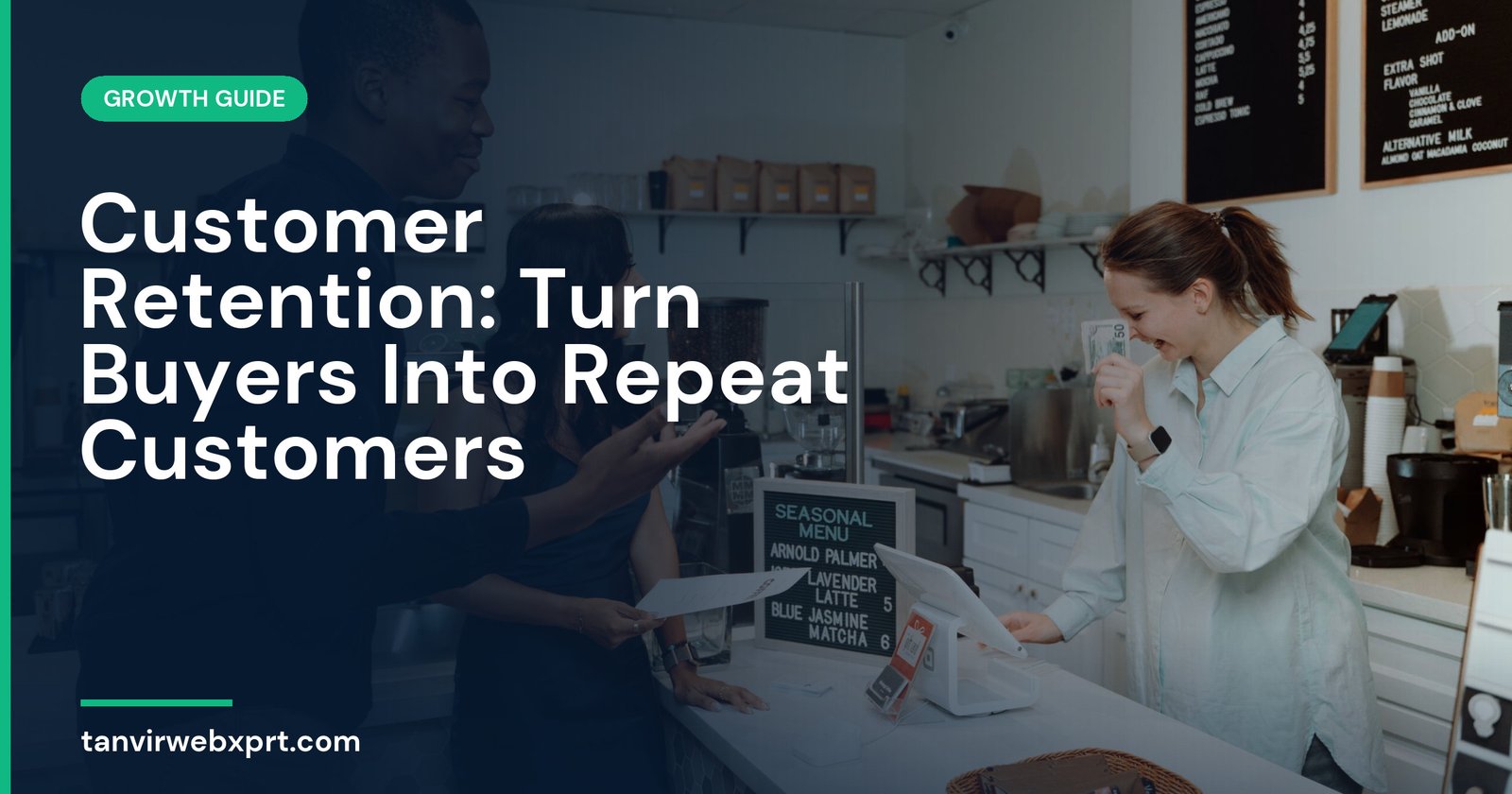
The best customer retention strategies make it easy and rewarding to buy from you again: deliver a great first experience, follow up after every purchase, keep in touch with useful messages, reward loyalty, and fix problems quickly when something goes wrong. Retention matters because keeping a customer usually costs far less than finding a new one. Research summarised by Harvard Business Review puts acquiring a new customer at 5 to 25 times the cost of keeping an existing one, and Bain and Company found that a 5% increase in retention can raise profits by 25% to 95%.
- Your existing customers are your cheapest source of new sales.
- The first order sets the tone. Make it feel personal and smooth.
- Follow up with something useful, not just another discount.
- Measure repeat purchase rate so you know if things improve.
- Build a retention plan with the free AI Business Growth Consultant.
The tea stall that never advertises
There is a tea stall near almost every office area in Dhaka that never runs ads, never posts on Facebook and is busy from morning to night. The owner remembers who takes less sugar, who likes ginger, who wants biscuits with it. He asks about your exam, your new job, your mother’s health.
His customers come back twice a day for years. Not because the tea is the cheapest or even the best in the city, but because he makes each person feel known. That is customer retention at its simplest, and it works just as well for an online shop or a service business, as long as you design for it on purpose.
Why retention beats chasing new customers
- Returning customers already trust you, so they buy faster and haggle less.
- They often spend more per order over time.
- They recommend you to friends, which brings new customers for free.
10 customer retention strategies that work for small businesses
1. Nail the first experience
Fast replies, accurate photos, careful packaging, delivery on time. A handwritten thank-you note costs almost nothing and is remembered for months.
2. Follow up after the purchase
A message two or three days after delivery: “Did everything arrive safely? Any questions about using it?” It catches problems early and shows you care beyond the sale.
3. Make reordering effortless
Save customer details (with permission), offer quick reorder links, and remember what people bought last time. For consumables, remind them before they run out.
4. Start a simple loyalty reward
A stamp card, “every 5th order gets free delivery” or points that turn into a small discount. Keep it simple enough to explain in one sentence.
5. Keep in touch with useful content
Care tips, recipes, new arrivals, how-to videos. A WhatsApp broadcast list, email newsletter or Facebook group works. One or two messages a month is plenty.
6. Fix complaints generously
A customer whose problem is solved quickly and kindly often becomes more loyal than one who never had a problem. Replace, refund or apologise without making them fight for it.
7. Ask for feedback and act on it
A short question like “What is one thing we could do better?” brings ideas you would never think of. Tell customers when you make a change because of them.
8. Surprise loyal customers
An unexpected gift on a birthday or anniversary of their first order, early access to a sale, or a free sample of a new product.
9. Build a community
A customer group where people share how they use your product, ask questions and help each other. It turns buyers into fans.
10. Win back quiet customers
Find people who have not ordered in 60 or 90 days and send a friendly personal message: “We miss you, here is what is new.” Retargeting ads to past buyers can help too, see our retargeting guide.
How to measure retention
| Metric | How to calculate | Why it matters |
|---|---|---|
| Repeat purchase rate | Customers with 2+ orders divided by all customers | The simplest sign that people come back |
| Customer retention rate | (Customers at end of period minus new customers) divided by customers at start | Shows how many you keep over a period |
| Average time between orders | Average days between a customer’s orders | Tells you when to send reminders |
| Customer lifetime value | Average order value x orders per year x years as a customer | Tells you how much you can spend to win a customer |
A 30-day retention plan
- Week 1: MeasureCount how many customers ordered more than once in the last 6 months.
- Week 2: Follow upStart a post-purchase message for every order.
- Week 3: RewardLaunch one simple loyalty offer.
- Week 4: Win backMessage customers who have been quiet for 90 days.
Plan your next steps
Retention works best as part of a wider plan. The free AI Business Growth Consultant suggests retention and growth actions for your type of business, and our 90-day growth plan template helps you schedule them.
Sources
Frequently asked questions
What is customer retention?
Customer retention is a business’s ability to keep customers buying again over time instead of losing them after the first purchase.
Why is customer retention important?
Keeping customers is usually much cheaper than finding new ones. HBR reports acquisition can cost 5 to 25 times more, and Bain found a 5% retention increase can raise profits by 25% to 95%.
What is a good repeat purchase rate?
It depends heavily on the product. Everyday items should see many repeat buyers, while furniture or electronics will see fewer. Track your own rate and aim to improve it month by month.
How can a small business improve customer retention?
Deliver a great first experience, follow up after purchases, make reordering easy, reward loyalty, keep in touch with useful content and fix complaints generously.
How do I calculate customer lifetime value?
Multiply average order value by the number of orders per year and the number of years a customer typically stays with you.
Answer a few questions about your business and get a practical growth plan you can start this week.
Guides for this tool
 Guide · 5 min readHow to Do a SWOT Analysis for a Small Business (With Example)
 Guide · 5 min readHow to Get More Customers for a Local Business: 7 Proven Ways
 Guide · 5 min readHow to Price Your Product or Service: A Simple Guide for Small Businesses
 Guide · 4 min readHow to Write a One-Page Business Plan (Free Template and Example)
Want a tool, website or app like this for your business?
Every free tool on this site is designed and coded by Tanvir H, a Bangladesh-based WordPress and Elementor web designer with 7+ years of experience and 650+ projects for clients worldwide. Fast, mobile-first, search-optimised websites that turn visitors into customers.
- 650+ projects
- 7+ years
- 4.9★ rating
- Govt. registered freelancer